Does South Africa Have Nuclear Weapons?
Ag shame, the question of whether South Africa possesses nuclear weapons isn't a simple "yes" or "no." The short answer is a definitive "no," but the journey to that point is a gripping narrative, a rollercoaster ride through Cold War anxieties, the shadow of apartheid, and a surprising U-turn in global nuclear politics. Let's delve into the fascinating, and sometimes unsettling, truth.
South Africa's Secret Nuclear Programme: A Cold War Secret
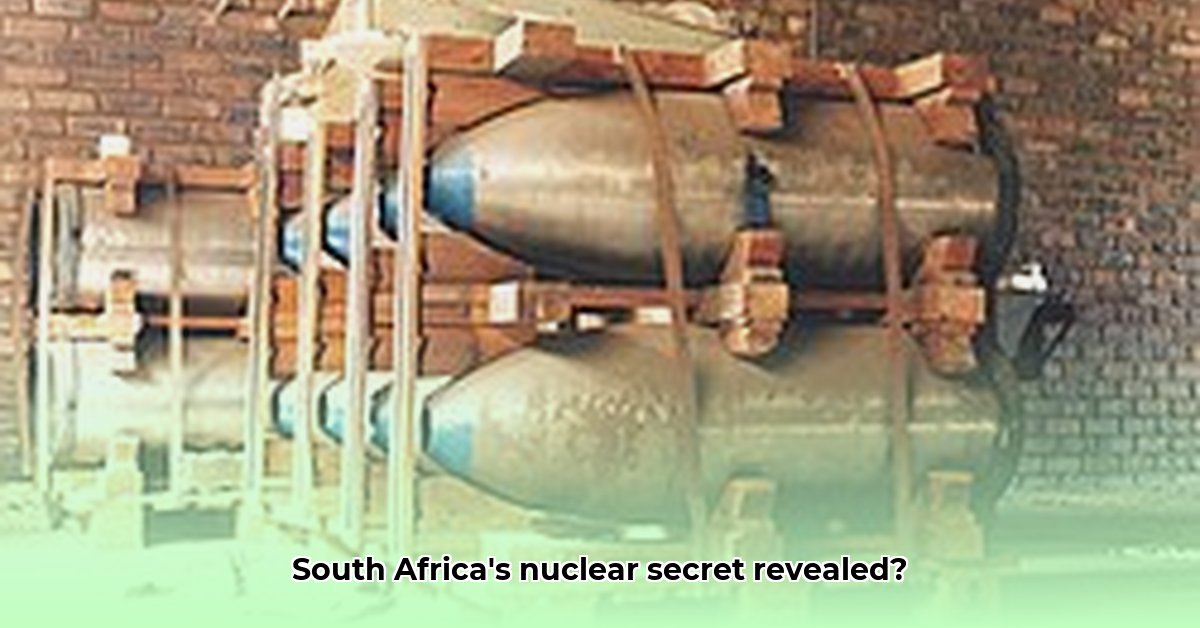
Picture the 1970s and 80s: the Cold War was at its height, and South Africa, under apartheid, felt increasingly isolated and vulnerable. To project power and deter threats, the government embarked on a clandestine nuclear weapons program. While the precise number remains classified, estimates point to around six functional devices. The whole operation was shrouded in secrecy, a testament to the lengths some nations will go to acquire such destructive power. This secrecy was partly driven by regional power dynamics and partly by a deep-seated fear of instability. But was this secrecy ultimately beneficial? It certainly raised the stakes.
The Mandela Moment: An Unprecedented Disarmament
Then came a monumental shift. With the end of apartheid and Nelson Mandela's presidency, South Africa embarked on a path of reconciliation and international rehabilitation. The newly democratic government made a bold, unprecedented decision: to dismantle its entire nuclear weapons program. This wasn't just unexpected; it was revolutionary. A nation voluntarily relinquishing a nuclear arsenal is practically unheard of. Why this dramatic change? Several factors converged: the end of apartheid, a commitment to global cooperation, and a re-evaluation of national priorities. Did this bold move truly impact South Africa's standing on the world stage? Absolutely.
South Africa Today: A Nuclear-Weapon-Free Zone
So, does South Africa possess nuclear weapons today? No. The program has been completely dismantled. The country actively champions nuclear non-proliferation, setting a precedent for global security. South Africa has signed all major treaties and actively supports initiatives to reduce nuclear threats. This commitment is a significant achievement, a story of transformation and international responsibility. While this journey is singular, it has become a benchmark for those striving for a world free from nuclear weapons. But what challenges remain? This is a question worth exploring.
Lessons for the World: A Unique Case Study
South Africa's journey offers profound lessons about nuclear proliferation. It demonstrates that technological capability is only one piece of the puzzle; political will and national priorities play an equally critical, if not more significant, role. It shows that change is possible, that nations can choose a path of peace over power projection. Yet, is South Africa's experience easily replicated? Each nation has its unique history and security concerns; there's no one-size-fits-all solution. And what about the long shadow of Project Coast, the biological weapons program? This deserves further investigation.
Comparing South Africa to Others: A Tale of Two Approaches
Comparing South Africa's trajectory with other nuclear-armed states reveals stark contrasts. Many nations developed nuclear weapons primarily for power projection and international leverage. South Africa's motivations were far more complex, blending internal and external pressures. Their decision to dismantle their nuclear program starkly contrasts with other powers who continue to expand their arsenals. It remains a unique case study with powerful, albeit not easily transferable, lessons.
The Bottom Line: A Story of Change
To reiterate: No, South Africa does not possess nuclear weapons. The story of its nuclear past, the surprising dismantling of its arsenal, and its current commitment to non-proliferation is a compelling narrative, demonstrating the possibility of transformative change and responsible global leadership. It’s a narrative demanding analysis and reflection amidst the ongoing challenge of nuclear weapons in the world today. How might this story translate into a proactive method for future nuclear disarmament projects? This is a pertinent question for all nations.